
Against the backdrop of an aging population and a shortage of rural labor, the transformation towards agricultural intelligence has become a global issue. As an efficient and flexible modern agricultural technology, drone sowing is evolving from “extensive broadcasting” to “precise point shooting”. Behind this technological leap, micro stepper motors are playing a crucial role – they enable every seed to be precisely placed in its designated location, truly achieving “centimeter-accurate” precision agriculture.
This article will delve into how micro stepper motors have become the core driving force for precise seeding by drones, focusing on three dimensions: technical principles, control systems, and application cases.
Industry pain points of drone seeding
The traditional drone seeding method primarily employs centrifugal disc or pneumatic seeding, where seeds are thrown out from a hopper and scattered in a fan-like pattern. This seeding method presents three prominent issues:
Difficulty in forming rows and holes: The sowing method is difficult to control the landing position of seeds, making it impossible to form regular sowing rows and holes, which affects subsequent field management and ventilation and light penetration.
Interference from rotor wind field: The downwash generated by the drone’s rotor can scatter seeds, leading to uneven sowing, especially during high-speed operations.
Poor seeding uniformity: The coefficient of variation in traditional sowing is often high, making it difficult to meet the requirements of modern agriculture for seeding accuracy.
These issues directly affect the seedling emergence rate and ultimate yield of crops such as rice. How to achieve precise and uniform sowing has become a technical challenge that urgently needs to be addressed in the application of drones in agriculture.
The core function of the micro stepper motor: the “switch” for precise seeding
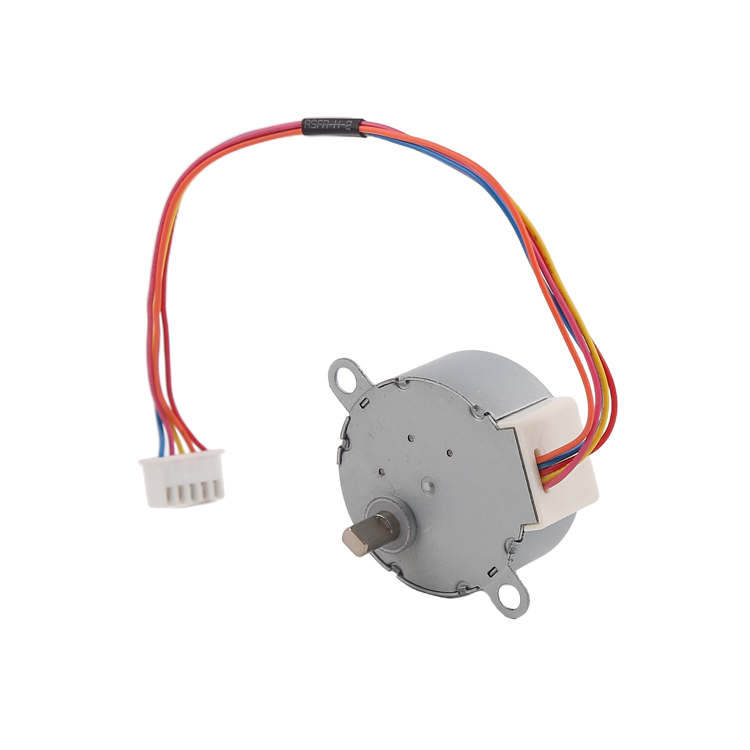
To address the aforementioned issues, the key lies in transitioning from “broadcasting” to “pointed seeding” – where each seed is precisely placed through a mechanical device. In this approach, a micro stepper motor serves as the core actuator for controlling the seed metering device.
The core component of the point-shooting seeding device is the seed metering device, which is responsible for quantitatively taking out and projecting seeds from the material box. The rotational speed of the seed metering device directly determines the seeding quantity and pace.
The micro stepper motor plays a pivotal role in this process. The stepper motor exhibits the characteristic of “rotating a fixed angle for each pulse signal input”, and its rotational speed is strictly proportional to the pulse frequency. The control system employs the PID algorithm to perform closed-loop control on the rotational speed of the stepper motor, adjusting the operational speed of the seed metering device in real-time to ensure precise matching between the seeding quantity and the drone’s flight speed.
The experimental data indicates that the drone seeding system, controlled by a stepper motor, exhibits excellent dynamic adjustment capabilities, with an average relative error of seeding quantity less than 4% at operating speeds ranging from 1.0 to 2.5 m/s.
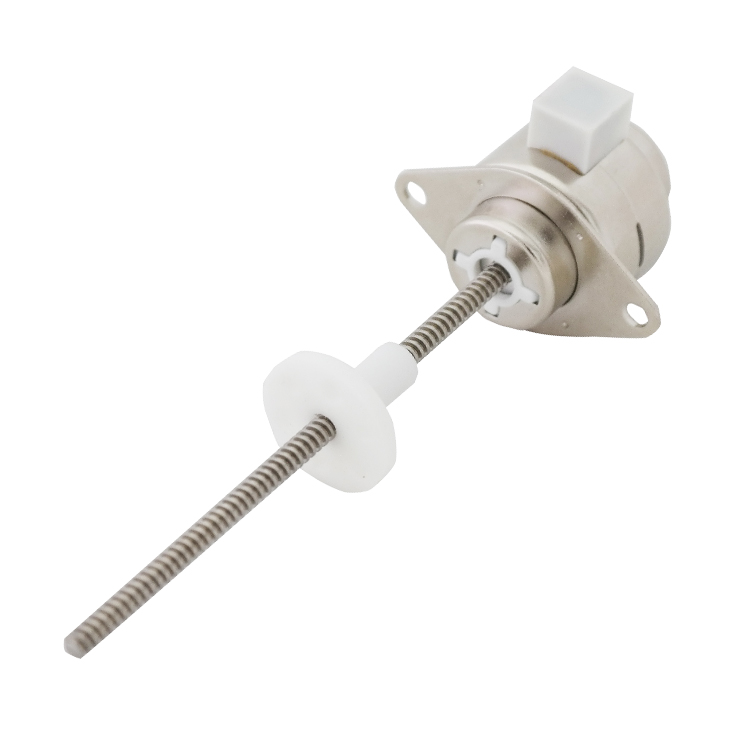
In addition to controlling the rotational speed, micro stepper motors can also drive the displacement and angle adjustment of the seeding pipeline. Patent technology shows that a drone with seeding function has a stepper motor fixed on the inner wall of the body, and the motor output end is connected to a threaded rod, which drives the seeding pipeline to move up and down through a threaded block, achieving precise opening and closing of the seeding structure.
This design utilizes a reset spring and a shielding plate structure. When the stepper motor drives the seeding structure to move downwards, the shielding plate simultaneously moves away, opening the discharge hole, allowing the seeds to fall precisely into the predetermined position. The seeding and discharging are uniformly controlled by a single power structure, ensuring that there is no gap between the seeding and discharging actions, greatly improving work efficiency and seeding quality.
In the nighttime sowing scenario, micro stepper motors also play a unique role. A patent for an agricultural low-altitude flying drone for sowing discloses such a design: the stepper motor drives the spotlight to rotate back and forth in small amplitude, adjusting the direction of light source irradiation, while simultaneously driving the sowing tube to rotate through a connecting rod, ensuring that the spotlight and the sowing tube are aimed at the planting pit synchronously.
When the camera detects the planting pit, the stepper motor precisely adjusts the angles of the spotlight and the seeding tube to achieve “point-to-point” precise seeding, effectively preventing seeds from deviating from the planting pit during nighttime operations. This provides technical support for 24-hour uninterrupted seeding operations.
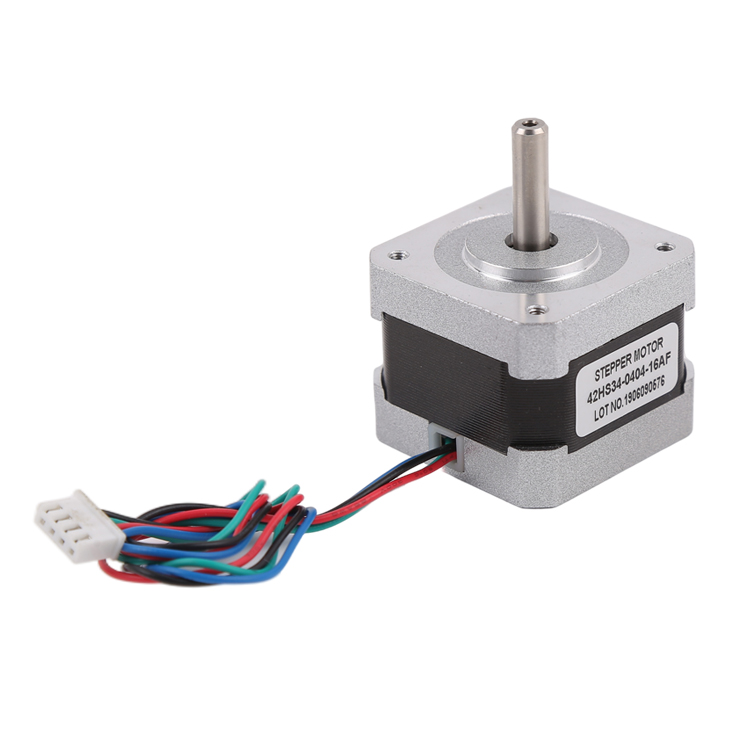
A complete drone precision seeding control system requires the collaborative cooperation of both hardware and software. Taking the “drone point-shooting rice seeding device control system” designed by the team at South China Agricultural University as an example, this system achieves the following functions:
PID closed-loop control: Based on the PID algorithm, the rotational speed of the seed metering device’s stepper motor is controlled in a closed-loop manner. The seed metering rate is adjusted in real-time according to the drone’s flight speed, ensuring a constant seeding amount per unit area.
State machine seeding control: The seeding control program is designed through a finite state machine to achieve full-process automation control, including operation route planning, seeding rate calibration, parameter setting, seed surplus display, and automatic seeding.
Ground station coordination: Develop complementary ground station functions, allowing operators to plan flight paths, set parameters, and monitor operational status on a computer terminal, achieving intelligent operations with “one-click seeding”.
Field tests have verified the excellent performance of this system: under the conditions of an operating height of 1.5 meters, a seeding rate of 90 to 150 kg/hm², and an operating speed of 0.5 to 2.0 m/s, the coefficient of variation for seeding uniformity ranges from 20.51% to 35.52%. The relative errors in field seeding rates are 2.47% and 4.12%, respectively, and the seed damage rates are only 0.34% and 0.18%, fully meeting the precision control requirements for rice aerial sowing as stipulated by relevant standards.
With the continuous maturity of technology, precision seeding systems based on micro-stepping motors are moving from the laboratory to the fields. Their commercial value is reflected in the following aspects:
Seed conservation: Precision sowing avoids the waste phenomenon of traditional broadcast sowing, reducing the seed quantity per acre by 10% to 20%.
Yield-increasing potential: The planting method of forming rows and holes improves the ventilation and light transmission conditions of crops, which is beneficial for tillering and grain filling in the later stage. It is expected to increase yield by 5% to 10%.
Labor substitution: A precise seeding drone can complete operations over hundreds of acres per day, significantly replacing manual transplanting and sowing labor.
Extended operation window: With the aid of a micro stepper motor-driven night lighting and positioning system, drones can operate continuously at night, seizing the best farming season.
Looking ahead, the application of micro stepper motors in the field of precision seeding for drones will exhibit three major trends:
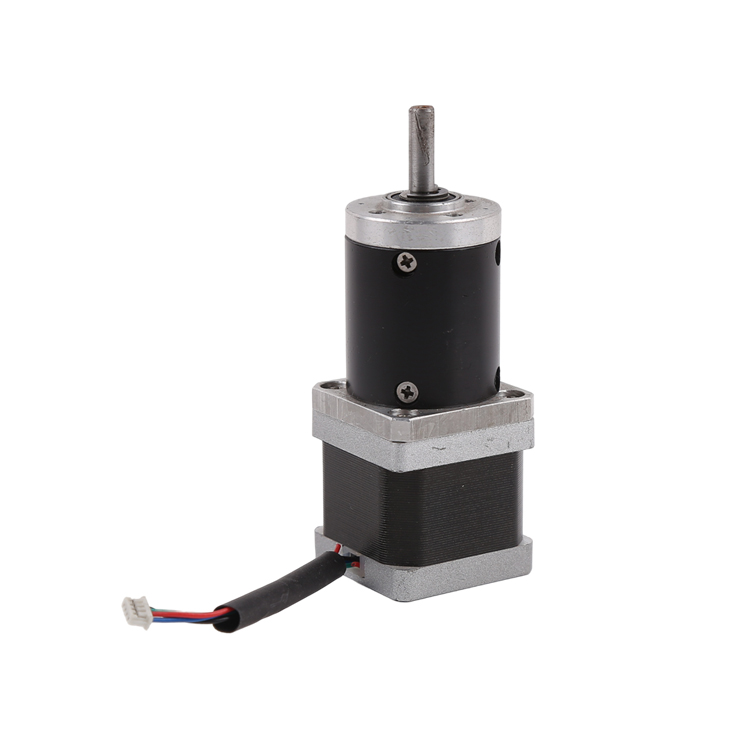
Further miniaturization and integration: As the diameter of the motor shrinks to below 8mm, the seeding device will become more compact, allowing for the carriage of more seeds and extending the duration of a single operation.
Enhanced intelligence: By integrating machine vision and AI algorithms, the seeding system controlled by a stepper motor can automatically adjust the seeding depth and row spacing based on soil moisture conditions and topographical variations, achieving true “adaptation to local conditions”.
Multi-crop coverage: Current technology is primarily applied to field crops such as rice, and will expand to commercial crops like corn, soybeans, and vegetables in the future, meeting the needs of diversified planting.
Conclusion
From extensive sowing to precise point shooting, micro stepper motors are driving a profound transformation in drone seeding technology. With micrometer-level precision control, they ensure that every seed finds its own “home” – this is the true meaning of “not a hairsbreadth off”.
With the advent of the era of precision agriculture, the value of micro stepper motors will be redefined: they are not only “standard components” in the field of industrial automation, but also “key gears” in the intelligent transformation of modern agriculture. In the future, we have reason to believe that this technology, originating from industry, will shine even brighter on the vast fields.
Post time:
Mar-24-2026
