
Miniature stepper motors have become essential components in the rapidly evolving field of micro-robotics. These compact, precise actuators enable the development of tiny walking robots capable of navigating complex environments where larger machines cannot operate. This article explores the application of miniature stepper motors in miniature walking robots, their technical advantages, design considerations, real-world examples, and future potential. By optimizing for precision locomotion in confined spaces, these motors are driving innovations in inspection, exploration, and medical applications.
What Are Miniature Stepper Motors?
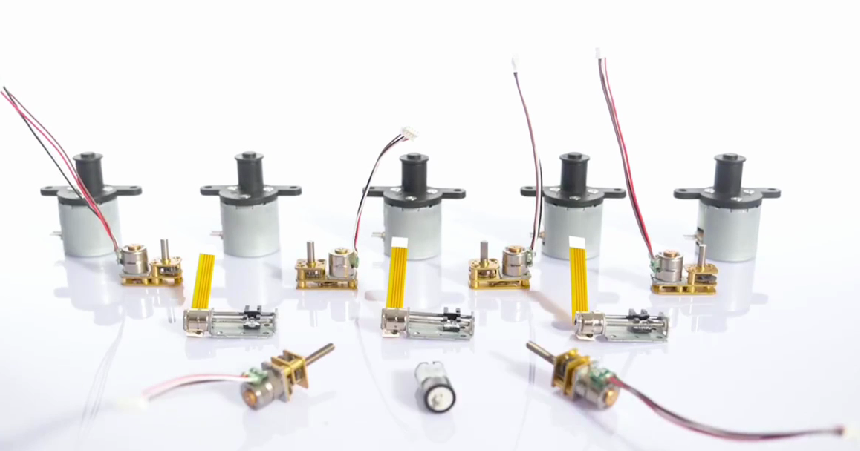
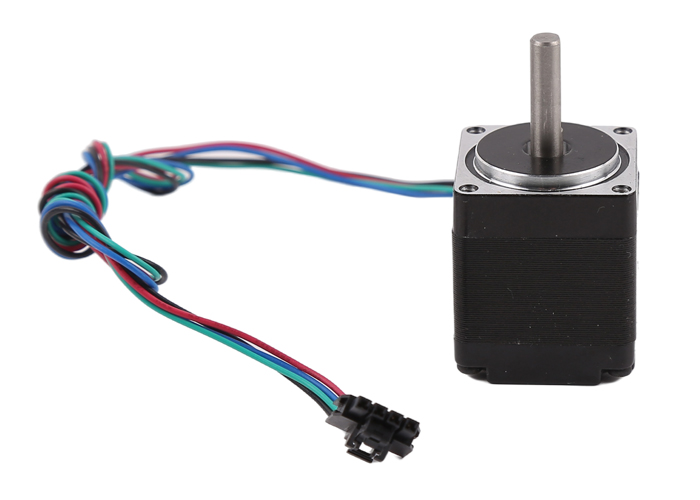
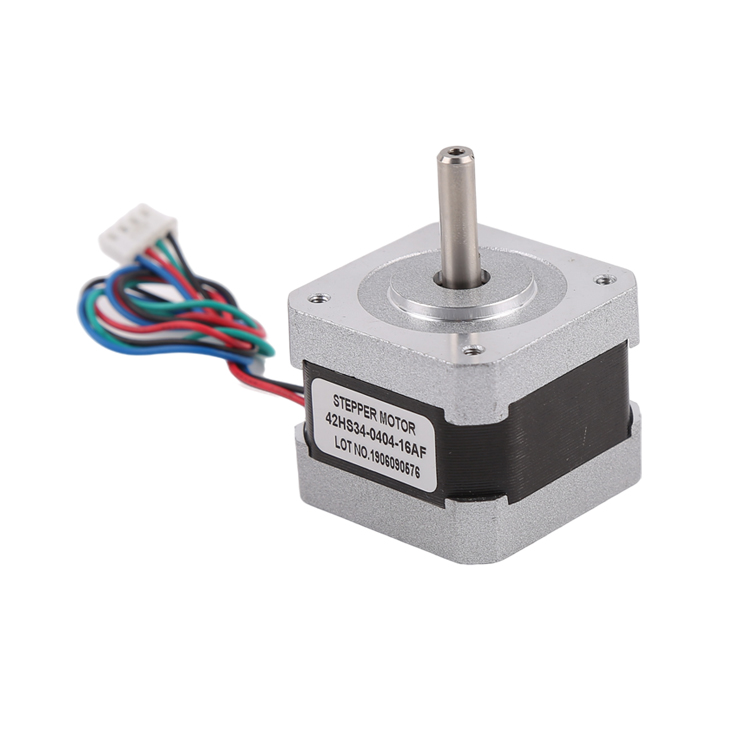
Miniature stepper motors, also known as micro stepper motors, are small electric motors that divide a full rotation into discrete steps. Unlike continuous rotation motors, they move in precise increments, making them ideal for applications requiring accurate positioning without complex feedback systems.
Typical specifications for miniature versions include:
- • Diameters as small as 6-42mm.
- • Low power consumption (often under a few watts).
- • High step resolution, enhanced further by micro-stepping techniques that divide each full step into hundreds of smaller increments for smoother motion.
Common types used in robotics include permanent magnet (PM), variable reluctance (VR), and hybrid designs. Piezoelectric linear stepper variants are also popular for ultra-compact walking mechanisms due to their high force output in small packages.
In miniature walking robots, these motors provide the controlled, incremental movements needed for leg articulation, inchworm-style crawling, or discrete stepping gaits.
Why Miniature Stepper Motors Excel in Miniature Walking Robots
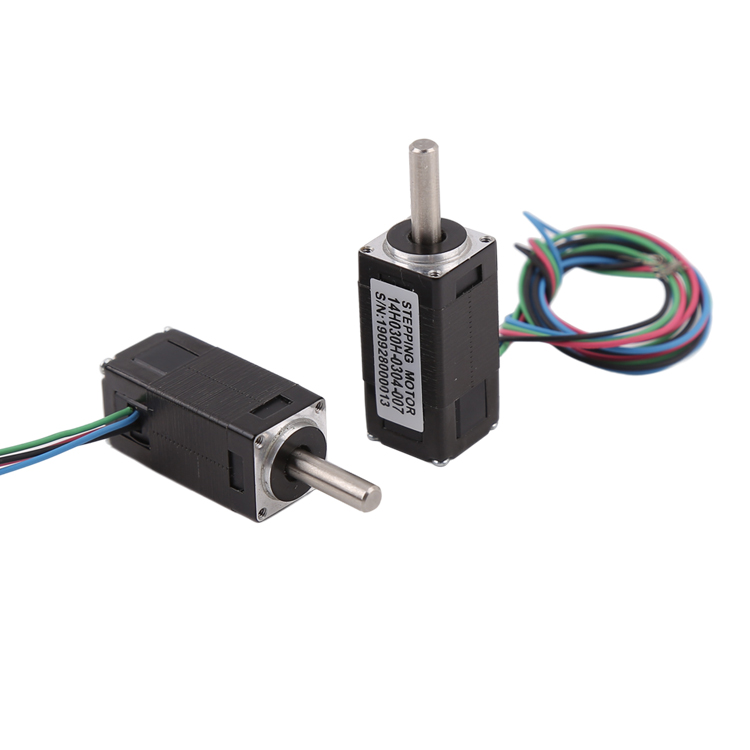
Several key benefits make miniature stepper motors the preferred choice for micro-scale legged robots:
They offer excellent open-loop control, achieving sub-degree or even nanometer-level positioning with micro-stepping. This is critical for stable gait in tiny robots where minor errors can cause tipping or stalling.
Their small footprint allows integration into robots measuring just centimeters or millimeters, preserving payload capacity for sensors or batteries.
Easy interfacing with microcontrollers (e.g., Arduino, Raspberry Pi) via pulse signals. No need for encoders in many cases, reducing complexity and cost.
Ideal for overcoming friction or climbing small obstacles in legged locomotion, especially when geared.
Low vibration with micro-stepping, quiet operation, and robustness in harsh environments like industrial inspection or disaster zones.
Compared to DC servos or other actuators, miniature steppers often provide better holding torque and positional accuracy for static stability in walking gaits.
How Miniature Stepper Motors Enable Walking Mechanisms
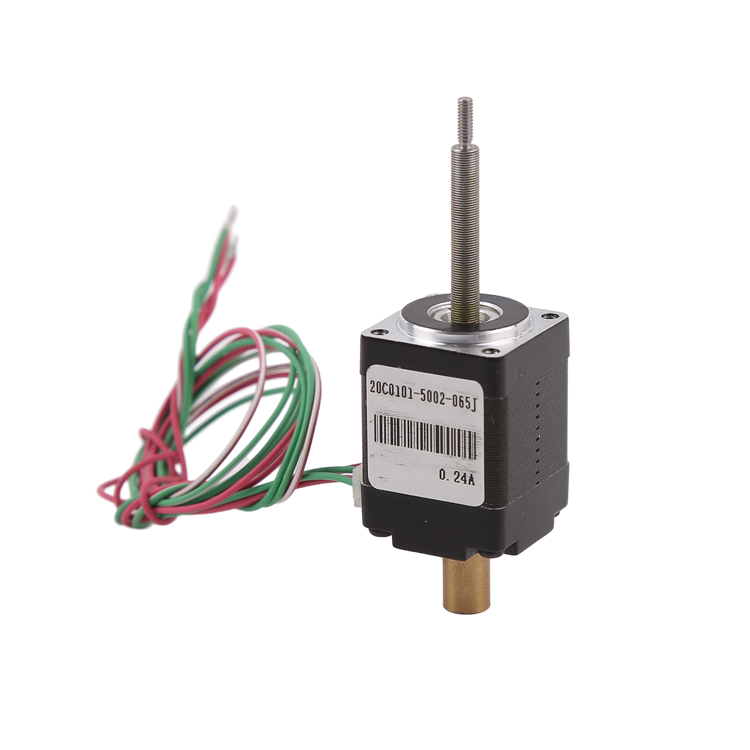
Miniature walking robots typically mimic biological locomotion such as inchworm crawling, quadrupedal gaits, or bipedal stepping. Miniature stepper motors drive these through direct leg actuation or linkage systems.
- · Inchworm or Linear Stepping: Piezoelectric miniature linear stepper motors extend and contract a body segment while anchoring front/rear “feet” with cilia or pads. This creates reliable forward motion on varied surfaces.
- · Legged Designs: Motors at hip/knee joints drive linkages. For example, modular “walking motors” assembled from basic parts (struts, hinges, electromagnetic actuators) produce discrete steps reminiscent of molecular motors.
- · Gait Control: Pulse sequencing coordinates multiple motors for multi-legged stability. Micro-stepping smooths transitions, reducing resonance and improving efficiency on uneven terrain.
Challenges at micro-scale include surface adhesion, power density, and fabrication. Stepper motors address these with high force-to-weight ratios and compatibility with 3D printing or MEMS processes.
Real-World Examples and Case Studies
Several innovative projects demonstrate the power of miniature stepper motors in walking micro-robots:
- Piezoelectric Inchworm Robots: Chinese patents describe square-bodied robots with linear stepper motors, guide rails, and cilia for surface adaptability. They achieve continuous motion in narrow spaces for industrial inspection or search-and-rescue.
- MOTILE and Discrete Assembled Walkers (MIT): Modular systems using voice coils and magnetic parts create tiny walkers that climb walls, move upside-down, and achieve high speeds in body-lengths per second.
- Millimeter-Scale Crawlers: Electromagnetic linear actuators or geared steppers power 5-6mm robots capable of carrying loads many times their weight, climbing slopes, and jumping obstacles.
- Bio-Inspired and Open-Source Designs: Projects like open micro-manipulators or bipedal walkers use miniature steppers for sub-micron precision, adaptable to locomotion.
Design Considerations for Integration
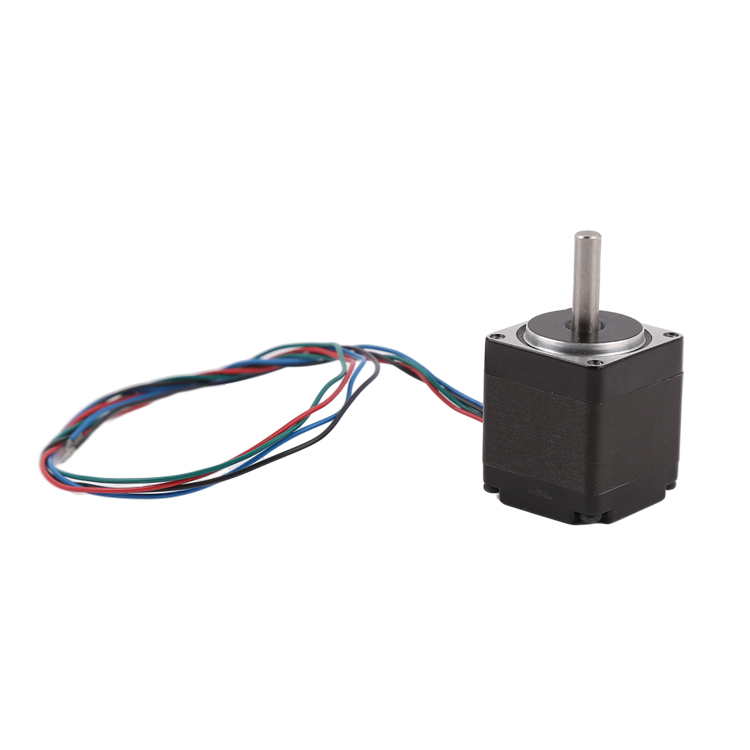
When designing miniature walking robots with miniature stepper motors:
Thermal management and vibration isolation are key to prevent missed steps.
Applications Across Industries
Miniature stepper motors unlock applications for walking micro-robots:
- · Industrial Inspection: Crawling inside engines or pipes for testing.
- · Search and Rescue: Navigating rubble or hazardous areas.
- · Medical and Biomedical: Minimally invasive devices or microsurgery.
- · Environmental Monitoring: Exploring confined spaces or remote data collection.
- · Micro-Manufacturing: Precise manipulation and assembly at small scales.
Challenges and Future Trends
Limitations include power autonomy at very small scales, complex terrain adaptation, and manufacturing costs. Ongoing research focuses on hybrid actuators, advanced materials (e.g., shape memory alloys combined with steppers), and better control algorithms.
Trends point toward mass-producible, electronically integrated micro-robots (millions per wafer) and bio-hybrid systems. Enhanced micro-stepping and closed-loop variants will further improve performance.
Conclusion
The application of miniature stepper motors in miniature walking robots represents a cornerstone of modern micro-robotics. Their precision, compactness, and controllability enable breakthroughs in accessibility to confined environments, promising transformative impacts across multiple sectors. As technology advances, these tiny actuators will continue powering smarter, more agile micro-machines.
Engineers and researchers exploring this field should prioritize reliable suppliers of high-quality miniature stepper motors and experiment with modular designs. The future of locomotion at the micro-scale is stepping forward—one precise increment at a time.
Post time: Jul-10-2026