
Augmented reality (AR) technology is transitioning from being a sci-fi concept to a common feature in everyday consumer electronics. From the initial attempts with Google Glass to the market buzz generated by Apple’s Vision Pro, AR glasses are widely regarded as the next computing platform following smartphones. However, to achieve a seamless integration of virtual imagery with the real world, AR glasses face a core challenge: precise adjustment of the optical system.

the optical system cannot adapt to these variables, users will see blurred and ghost images, seriously affecting the experience. In the process of solving this technical problem, micro stepper motors are playing an increasingly crucial role, becoming the “behind-the-scenes hero” of AR glasses for achieving clear imaging. This article will delve into how micro stepper motors achieve optical fine-tuning in AR glasses and why they have become the core component of the next generation of smart glasses.
Optical challenges of AR glasses: why is fine-tuning necessary?
In AR glasses, the design of the optical display system directly determines the quality of user experience. To understand the importance of micro stepper motors, we first need to be aware of several key optical challenges faced by AR glasses:
Interpupillary Distance (IPD) Variation: There are significant differences in the interpupillary distance (IPD) among different users, with the average IPD ranging from 58mm to 72mm for both males and females. If the optical center of the lenses in AR glasses cannot align with the user’s pupils, the user will not be able to achieve maximum clarity and field of view.
Exit pupil distance: The distance from the AR optical display system to the eyeball also affects the imaging quality. Different wearing methods and facial structure variations among users can all lead to changes in this distance.
Vision correction needs: Many AR glasses users inherently suffer from myopia, hyperopia, or astigmatism. If the AR device cannot accommodate the user’s refractive state, clear virtual images will be out of the question.
Zooming requirements: In AR/VR applications, virtual objects need to present a sense of depth at different distances, which requires the optical system to dynamically adjust the focal length to achieve a natural visual experience.
Facing these challenges, traditional mechanical adjustment methods often rely on manual operation, which not only limits the adjustment accuracy but also increases the size and weight of the equipment. This is precisely where micro stepper motors come into play.
Core applications of micro stepper motors
1. Automatic pupil distance adjustment: Align the optical center with the pupil
Pupil distance adjustment is the most common fine-tuning requirement in AR glasses. Traditional pupil distance adjustment typically requires users to manually rotate the lenses, which is not only inconvenient to operate but also difficult to achieve precise alignment. However, automatic pupil distance adjustment systems using micro stepper motors are changing this situation.
Currently, leading providers of micro-driving solutions have developed micro-stepping motor products specifically designed for pupil distance adjustment. For instance, a micro-stepping motor with a diameter of just 5mm, paired with a precision gearbox, utilizes a rack drive module to achieve linear motion. This system can work in conjunction with an eye-tracking module: a camera and an infrared module locate the pupil position in real time, and the system calculates the optimal lens position through algorithms. Subsequently, the micro-stepping motor drives the lens to move precisely, automatically adapting to the user’s pupil distance. The entire process occurs without user intervention, yet it achieves clear imaging.
In practical products, such micro-driving devices can have a diameter as small as 4mm and a torque up to 730mN.m, which is sufficient to drive the lenses to move smoothly. With such dimensions and performance, they can be easily integrated into the thin and lightweight temples or frames of AR glasses.
2. Dynamic zoom and visual compensation: catering to personalized needs
In addition to pupil distance adjustment, micro stepper motors also play a central role in the zoom function of AR glasses. The technological development of smart zoom glasses indicates that the use of micro stepper motors can effectively solve the problem of inaccurate zooming caused by the large size, heavy weight, and low linear reciprocating motion accuracy of traditional DC motor modules.
In a typical zoom drive scheme, a micro stepper motor drives the rear lens to move left and right through a lead screw transmission mechanism, thereby changing the overlap between the front and rear lenses to achieve continuous zooming of the glasses. This structure adopts a dual-guide rod design, greatly improving the stability during lens movement and ensuring zoom accuracy.
For users who require vision correction, this technology means that AR glasses can automatically adjust according to the user’s prescription, enabling the possibility of “one pair of glasses for multiple users” or seamless switching between presbyopia and myopia states.
3. Automatic adjustment of exit pupil distance: adapting to wearing differences
In addition to the lateral movement of the lenses, the vertical adjustment of the distance from the AR optical display system to the eyeball is equally important. The latest patented technology demonstrates that by simulating the actual distance of the AR optical display system from the eyeball through spatial algorithms, the system can drive a stepper motor to automatically adjust the position of the optical system to maximize its proximity to the preset exit pupil distance, achieving the best viewing experience for AR devices. This adjustment method is seamless for the user throughout the entire process, eliminating the need for manual operation and greatly enhancing the wearing experience.
Technical implementation: How does a micro stepper motor work?
Achieving precise driving within the limited space of AR glasses poses extremely high demands on micro stepper motors. Currently, the mainstream technical solutions include the following:
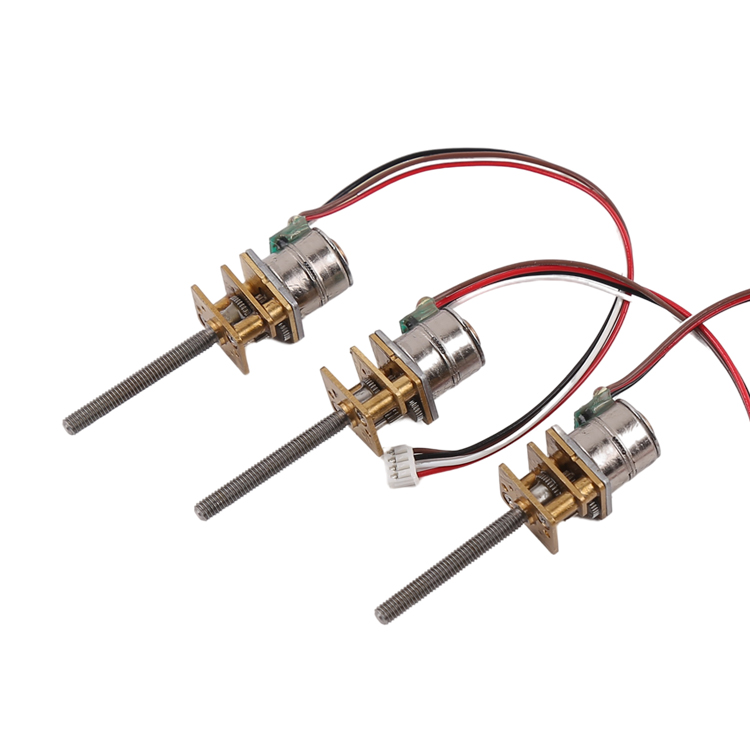
Lead screw transmission mechanism: The rotary motion is converted into linear motion of the sliding table by driving the lead screw to rotate with a micro stepper motor, thereby driving the lens to translate. The dual guide rod design ensures stability during movement and avoids vibration.
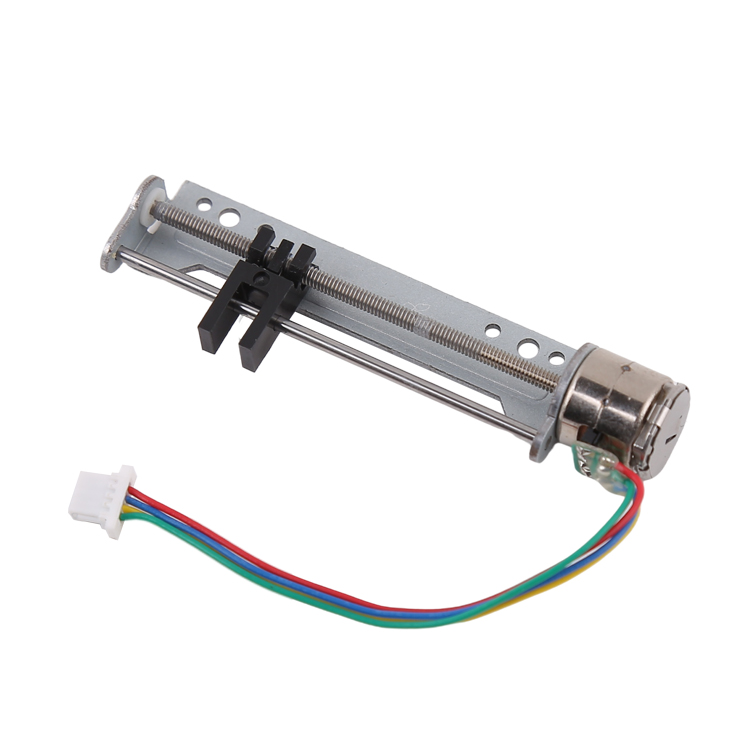
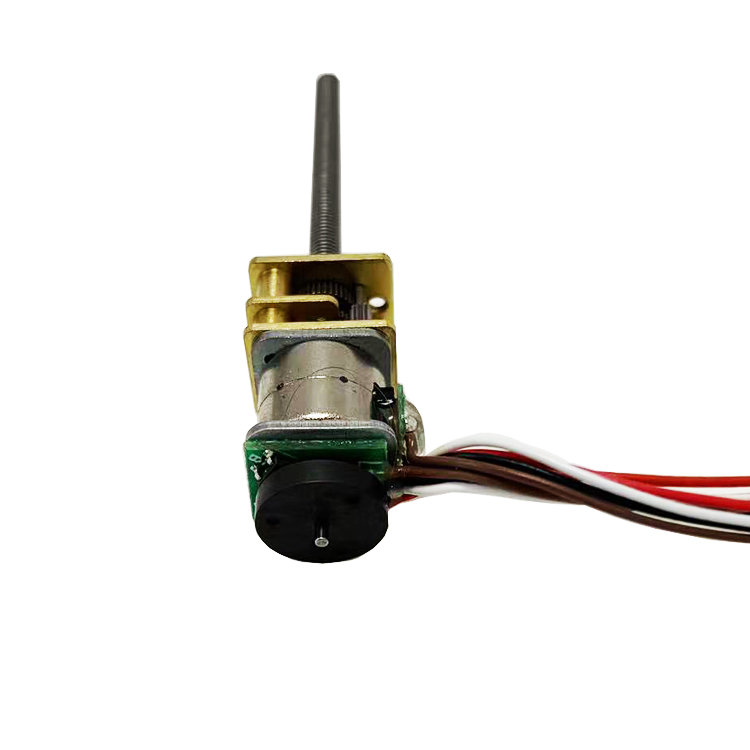
Closed-loop control and sensor fusion: To ensure adjustment accuracy, modern AR glasses drive systems often integrate photoelectric switches or encoders to achieve position feedback and closed-loop control. Combined with eye-tracking sensors, the system can perceive the user’s pupil position in real-time and make dynamic adjustments.
Industry trends and future outlook
The application of micro stepper motors in AR glasses serves as a typical example of the micro-special motor industry’s expansion into emerging application fields. According to industry analysis, as the trends of intelligence, automation, and informatization advance in various fields of life, emerging areas such as wearable devices, robots, and smart homes exhibit tremendous growth potential, which will drive the structural transformation and upgrading of the micro-special motor industry.
Looking ahead, the application of micro stepper motors in AR glasses will exhibit the following trends:
Further miniaturization: As AR glasses converge towards the appearance of ordinary glasses, the internal space becomes increasingly constrained. Micro-stepping motors with a diameter of 3mm or even smaller will become a focal point of research and development.
Intelligentization and integration: The integration level of motors, drive control circuits, and sensors will continue to increase, enabling “plug and play” intelligent execution units.
Low power consumption optimization: AR glasses need to be worn for extended periods, so the micro stepper motor must minimize power consumption while ensuring performance, thereby extending the device’s battery life.
Brushless trend: The advantages of brushless motors in terms of noise, lifespan, and efficiency make them the preferred solution for high-end AR glasses.
Conclusion
From their initial role as industrial automation components to their current indispensable role as the optical fine-tuning core in AR glasses, micro stepper motors are pioneering new application spaces in the field of smart wearable devices. They utilize micron-level precise movement to ensure the perfect integration of virtual images with the real world, elevating the augmented reality experience from “barely usable” to “immersive and comfortable”.
As AR technology accelerates its penetration into the consumer market, the value of micro stepper motors will become more prominent. For suppliers of micro drive systems, this represents not only an opportunity for market growth but also a chance for technological advancement. Only through continuous innovation can they secure a foothold in this multi-billion-dollar blue ocean market. For consumers, this means that future AR glasses will be lighter, thinner, and smarter, making the seamless integration of virtuality and reality a reality.
Post time: Mar-12-2026