
1. Joint drive of robotic arm
In multi joint robotic arm structures, hybrid stepper motors are the core power source for driving the rotation of each joint. The MDS/MMD-20 series rotary hybrid stepper motor launched by MTL in Japan is designed specifically for the end of robotic arms. The through axis structure supports cable routing for tools such as grippers, welding guns, and visual cameras, enhancing motion flexibility and anti-interference ability. It is suitable for 3C electronic precision assembly, medical equipment micro operation, and other scenarios. The ultra small hollow structure allows air tubes, cables, and optical fibers to directly pass through the motor axis, simplifying the joint design of the robotic arm and reducing external wiring interference. With the MTL encoder, it can achieve a system accuracy of ± 60 “, meeting the strict requirements of multi degree of freedom robots for repeated positioning accuracy.
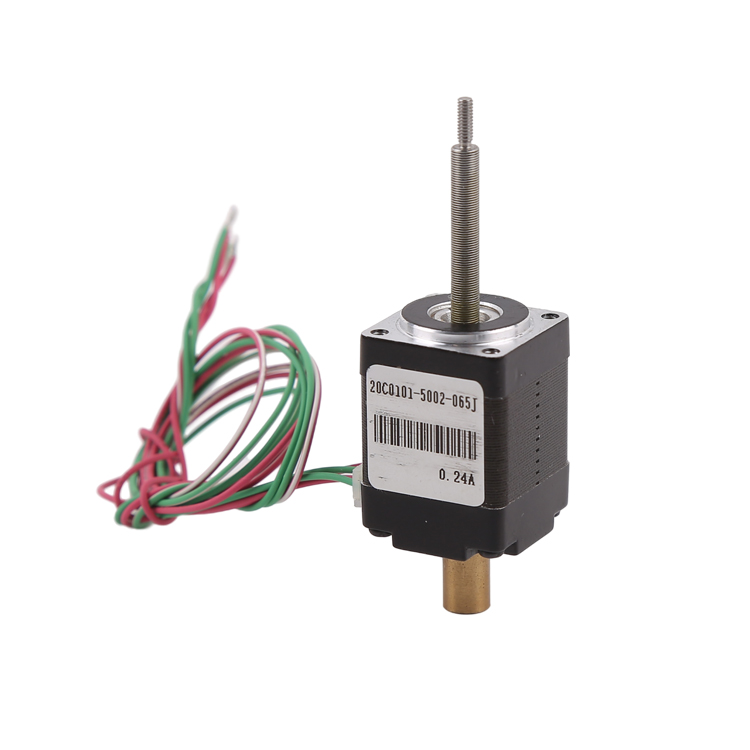
For compact joint drives of humanoid robots, manufacturers such as Vic Tech motor have launched integrated functional units that combine motors, integrated stepper gearboxes, and high-resolution encoders to unleash maximum performance potential with minimal space occupation.
2. Precise control of end effector (mechanical gripper)
As the “hand” of a robotic arm, the performance of a mechanical gripper directly determines the accuracy and efficiency of industrial automation. The electric gripper is driven by a servo/stepper motor, and its core advantage is extremely strong controllability – the opening and closing stroke, clamping force, and operating speed can all be accurately adjusted, adapting to the safety operation needs of collaborative robots. It can complete fine operations such as 3C electronic precision assembly, pharmaceutical sterile sorting, and fragile item handling, and is the fastest-growing category in the market in recent years.
With servo/stepper motor drive, closed-loop control, and adjustable force/position as the core, the hybrid stepper motor driven gripper replaces the pneumatic gripper, achieving precision, flexibility, and programmable gripping. The repeated positioning accuracy can reach ± 0.01mm level, and can grip workpieces ranging from 0.1g chips to over 10kg. By using stepper motor torque control technology, the maximum clamping force can be set according to actual needs to ensure that the grasped object is not damaged.
3. Motion control of humanoid robots
In humanoid robots, hybrid stepper motors are entering a wider range of motion control fields. Hybrid stepper motors with position feedback have natural advantages in robot finger actuation, head and neck movements, and torso adjustment, enabling precise sub degree motion control and suitable for fine motion expression of fingers and hands. Compared with other motor solutions, hybrid stepper motors achieve an ideal balance between cost, performance, and complexity, making them particularly suitable for humanoid robot designs that require human like movement but cannot afford the high cost of high-end servo motors.
4. Laboratory automation and precision operation robotic arm
In the fields of scientific research and laboratory automation, robotic arms driven by hybrid stepper motors are widely used for tasks such as chemical mixing, sample preparation, chip testing, and precision pipetting. They also perform well in high-precision scenarios such as micro pumps, fluid metering, and optical sensor control.
5. Precision machining and additive manufacturing
Frontier research shows that hybrid drive technology can also be applied in the field of precision machining for robots. The hybrid drive concept jointly developed by Siemens and Fraunhofer IFAM Institute intelligently combines two different types of drive systems into one transmission unit, enabling six axis robots to maintain stability and minimal vibration at high feed rates, approaching the machining accuracy of traditional machine tools. This technology enables robots to simultaneously perform additive manufacturing (3D printing) and subtractive manufacturing (milling), achieving material stacking and finishing in the same system.
Key points of selection
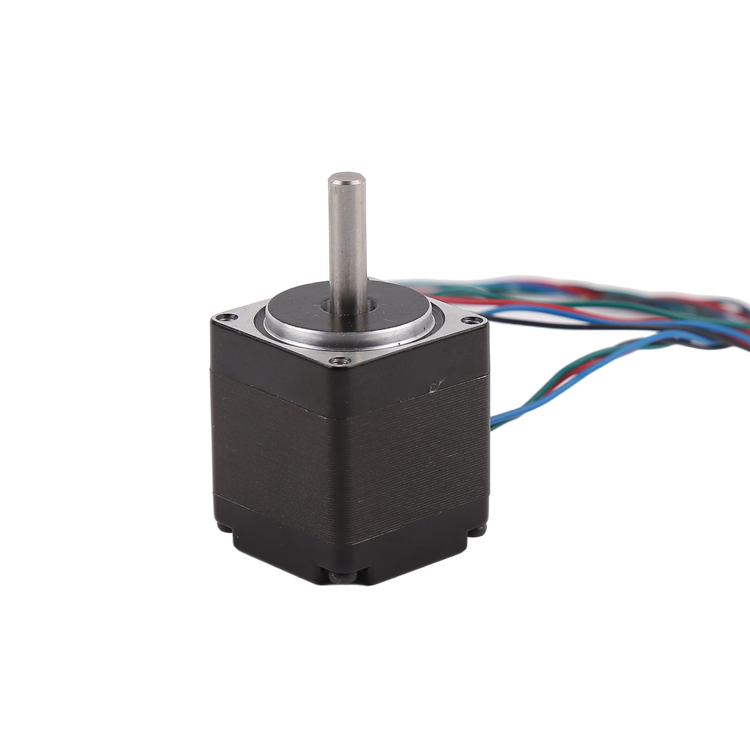
When selecting a hybrid stepper motor for a robotic arm, developers need to focus on the following aspects:
Base size: Common frame sizes for hybrid stepper motors include NEMA 8 (20mm), NEMA 11 (28mm), NEMA 14 (35mm), NEMA 17 (42mm), etc. Choose the appropriate frame size based on the joint or finger space limitations of the robotic arm.
Maintain torque: Joint drive requires 0.1-0.5N · m, end gripper requires 0.0058-0.3N · m, and handling robotic arms may require higher torque. When selecting, a safety factor of 30% to 50% should be added to the load calculation basis.
Step angle and accuracy: The standard 1.8 ° motor rotates 200 steps per revolution, and the 0.9 ° motor rotates 400 steps per revolution. With subdivision drive, higher micro step accuracy can be achieved. At the same time, pay attention to whether the stopping accuracy meets the requirement of within ± 3 arc minutes.
Encoder and closed-loop control: A closed-loop hybrid stepper motor solution with integrated encoder, which fundamentally solves the problem of step loss through real-time position feedback. The driver should support common industrial fieldbus protocols (such as Profinet, EtherCAT, EtherNet/IP) to facilitate integration with existing automation architectures.
Hollow shaft design: For end effectors that require the installation of vacuum pipelines, cables, or optical fibers, a hollow shaft hybrid stepper motor can be used to simplify structural design and enhance motion flexibility.
Environmental adaptability: Based on the working environment of the robotic arm, evaluate the protection level and temperature resistance range of the motor to ensure that it meets the actual working conditions.
Future Development Trends
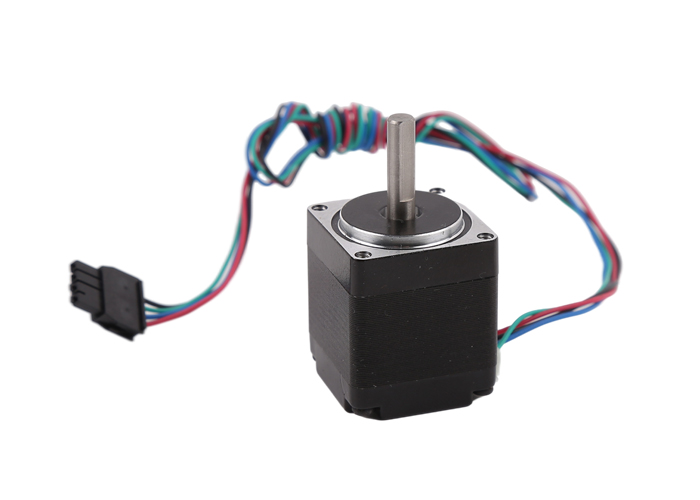
Looking ahead, the application of hybrid stepper motors in robotic arms will present the following main directions:
Closed loop integration: The solution of highly integrating encoders, drivers, and motors will become mainstream. The product achieves closed-loop control without battery or maintenance through a built-in mechanical absolute encoder, without the need for gain adjustment, and supports various industrial networks such as EtherCAT and Profinet.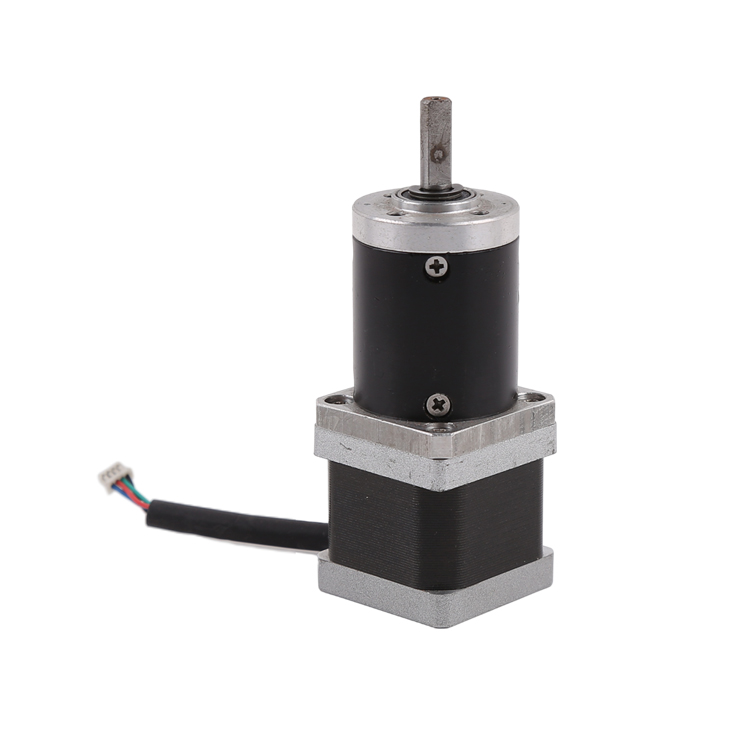
Ultra miniaturization: With the increasing demand for compact design in dexterous hands and collaborative robots, smaller hybrid stepper motors will continue to emerge, further expanding the degrees of freedom of robotic arms.
AI Fusion and Intelligence: The deep integration of hybrid stepper motors with AI vision and force perception enables autonomous adjustment and obstacle avoidance of robotic arms based on real-time feedback, enhancing the safety of human-machine collaboration. The closed-loop control hybrid motor can identify abnormal resistance and adjust the output accordingly, fundamentally avoiding the risk of mechanical damage caused by the inability of traditional stepper motors to sense external interference.
Conclusion
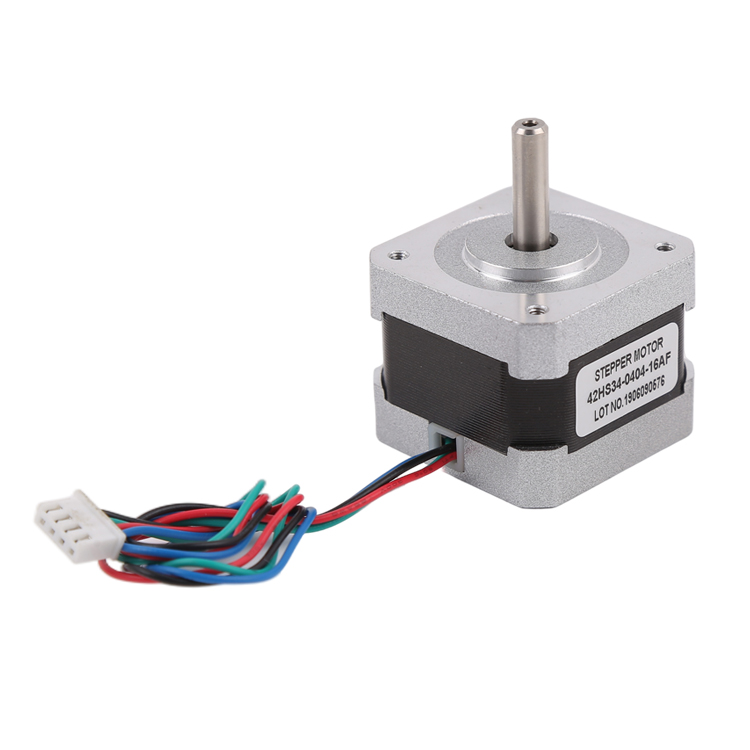
Although the hybrid stepper motor is compact in size, it plays an irreplaceable key role in modern robotic arms due to its comprehensive advantages such as high-precision positioning, compact structure, closed-loop reliability, and energy saving and environmental protection. From multi joint drive, end gripper, humanoid robot to precision machining equipment, the hybrid stepper motor has laid a solid foundation for the precision, agility, and intelligence of robotic arms in motion control. According to market research reports, the global hybrid stepper motor market revenue is expected to reach approximately $126.5 million in 2025 and is expected to maintain stable growth until 2032. With the continuous expansion of the global robotics industry, the demand for hybrid stepper motors will be further released, bringing more innovative opportunities to the motion control industry.
For engineers engaged in robot research and development, automation system integration, or intelligent device design, a deep understanding of the technical characteristics and selection methods of hybrid stepper motors will help create higher precision, more compact, and more intelligent robotic arm products, and seize the opportunity in fierce market competition.
Post time: Jun-04-2026