
In the rapidly evolving landscape of automation, precision, reliability, and compact design are paramount. At the heart of countless precise linear motion applications within automated robotic systems lies a critical component: the Micro Slider Stepper Motor. This integrated solution, combining a stepper motor with a precision linear slide or lead screw, is revolutionizing how robots move, position, and interact with their environment. This article explores the indispensable role these compact actuators play in modern robotics, from industrial arms to delicate laboratory automators.
Why Micro Slider Stepper Motors are Ideal for Robotic Systems
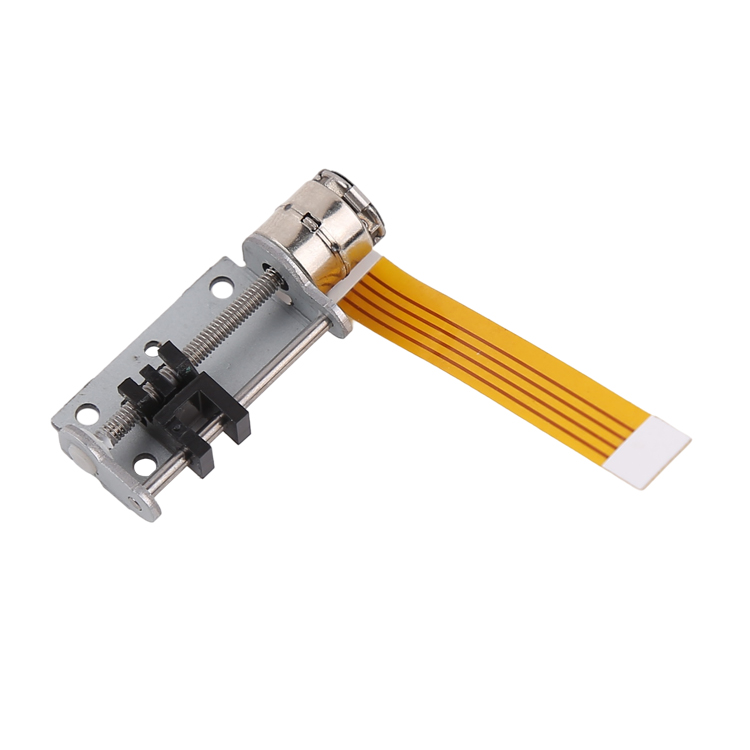
Robotic systems demand actuators that offer precise control, repeatability, and the ability to hold position without complex feedback systems in many cases. Micro slider stepper motors excel in these areas, providing a compelling alternative to traditional pneumatic cylinders or larger servo-driven systems for small-scale, precision movements.
Key Advantages for Robotics:
High Precision and Repeatability: Stepper motors move in discrete “steps,” typically 1.8° or 0.9° per full step. When coupled with a fine-pitch lead screw inside a slider, this translates into micron-level linear positioning accuracy. This is crucial for tasks like pick-and-place, assembly, and micro-dispensing.
Open-Loop Control Simplicity: In many applications, stepper motors can operate effectively without expensive position encoders (open-loop control). The controller commands a number of steps, and the motor moves accordingly, simplifying system design and reducing cost—a significant benefit for multi-axis robots.
Compact and Integrated Design: The “micro slider” form factor is a space-saving, self-contained unit. It combines motor, screw, and guiding mechanism into one ready-to-install package, simplifying mechanical design and assembly in space-constrained robotic joints or gantries.
High Holding Torque: When energized and not moving, stepper motors provide substantial holding torque. This “locking” capability is essential for robots that need to maintain a position without drifting, such as holding a tool or a component in place.
Durability and Low Maintenance: With fewer moving parts than pneumatic systems and no brushes (in the case of hybrid or permanent magnet steppers), these sliders are highly reliable and require minimal maintenance, ensuring uptime in demanding automated environments.
Excellent Low-Speed Performance: Unlike some motors that struggle at low speeds, stepper motors provide full torque at standstill and low RPMs, enabling smooth, controlled, and slow linear movements essential for delicate robotic operations.
Core Applications in Automated Robotic Systems
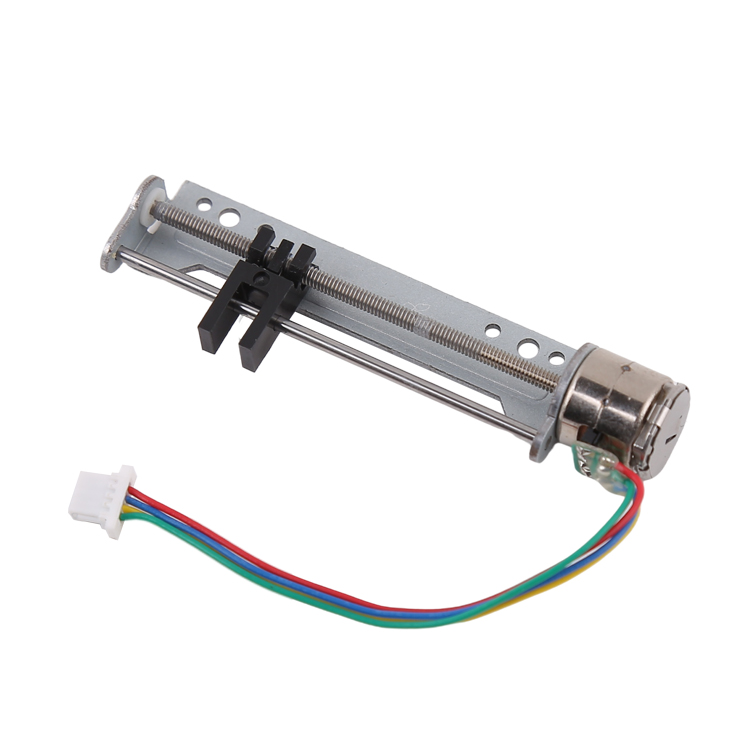
1. Industrial Robotics and Automation
In small-scale assembly lines and electronic manufacturing, micro slider steppers are the workhorses for precision tasks. They drive the axes of SCARA or Cartesian (gantry) robots used for placing surface-mount components, screwing, welding, and quality inspection. Their repeatability ensures every movement is identical, guaranteeing product consistency.
2. Laboratory and Liquid Handling Automation
In bio-tech and pharmaceutical labs, automated robotic systems for liquid handling, sample preparation, and microarray spotting demand extreme accuracy and contamination-free operation. Micro slider stepper motors provide the smooth, precise linear motion for pipetting heads and plate handlers, enabling high-throughput testing with minimal human intervention.
3. Medical and Surgical Robotics
While surgical robots often use sophisticated force-feedback servos, many ancillary systems within medical devices rely on micro sliders. They position sensors, cameras, or specialized tools in diagnostic automation (like slide staining) and assistive robotic devices with unwavering precision and safety.
4. Collaborative Robots (Cobots)
Cobots designed to work alongside humans often employ compact, lightweight actuators. Micro slider stepper motors are ideal for the smaller joints or end-effector axes (e.g., wrist tilt or grip) where precise, controlled movement in a small package is more critical than extreme speed or power.
5. 3D Printing and Additive Manufacturing
The print head or platform of many 3D printers is essentially a robotic positioning system. Micro slider steppers (often in the form of lead screw actuators) provide the precise X, Y, and Z-axis control needed to deposit material layer by layer with high dimensional accuracy.
6. Inspection and Vision Systems
Robotic vision cells used for automated optical inspection (AOI) require precise movement to position cameras or parts. Micro sliders adjust focus, rotate parts under a camera, or precisely align sensors to capture perfect images for defect detection.
Selecting the Right Micro Slider Stepper Motor for Your Robotic System
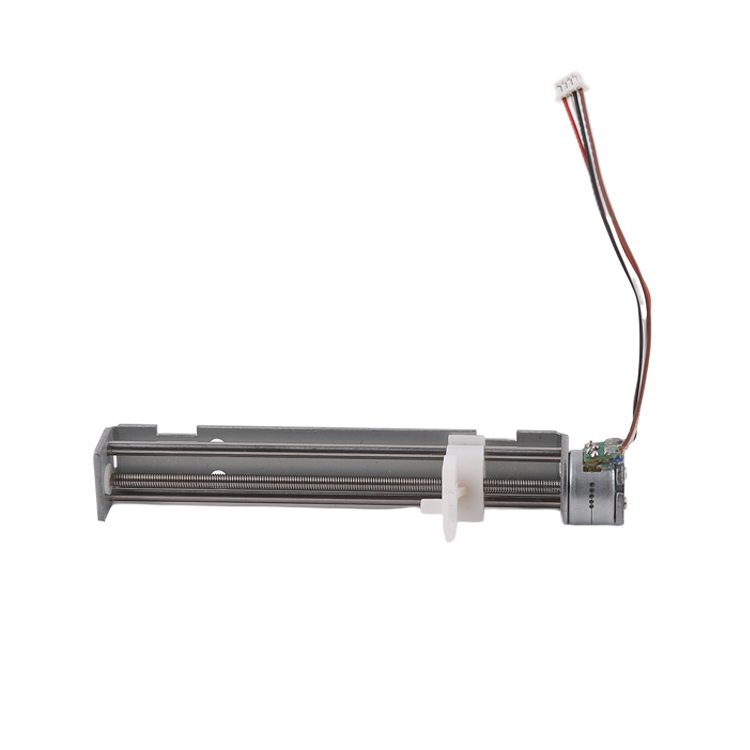
Choosing the optimal actuator requires careful consideration of several technical parameters:
Load Capacity and Force: Determine the mass and orientation (horizontal/vertical) of the load the slider must move and hold. This defines the required thrust force (N) or dynamic load rating.
Travel Length and Accuracy: Identify the necessary linear stroke. Also, specify the precision needed, often defined as accuracy (deviation from target) and repeatability (consistency in returning to a point).
Speed and Acceleration: Calculate the required linear speed and how quickly the load must accelerate/decelerate. This influences the choice of screw pitch and motor torque.
Duty Cycle and Environment: Consider how often and for how long the motor will run. Also, account for environmental factors like dust, moisture, or cleanroom requirements, which will determine the slider’s sealing (IP rating) and material.
Control Electronics: Stepper motors require a driver to translate controller pulses into motor currents. Modern drivers offer microstepping for smoother motion and reduced vibration. Ensure compatibility between the motor, driver, and the system’s controller (PLC, microcontroller, etc.).
Feedback Options: For applications where missed steps cannot be tolerated (e.g., vertical lifts), consider sliders with integrated linear encoders to provide closed-loop position verification, creating a “hybrid” step-servo system.
The Future: Smarter Integration and Enhanced Performance
The evolution of micro slider stepper motors is tightly coupled with advancements in robotics:
IoT and Connectivity: Future sliders will feature integrated sensors and communication ports (IO-Link, etc.) for real-time monitoring of health metrics like temperature, vibration, and wear, enabling predictive maintenance.
Advanced Control Algorithms: Smarter drivers are incorporating adaptive control algorithms that automatically tune current and damping to optimize performance for specific loads, reducing resonance and improving energy efficiency.
Direct Drive and Compact Designs: The trend is toward even more compact, high-efficiency designs with higher torque density, blurring the lines between steppers and brushless DC servos while maintaining the stepper’s control simplicity.
Material Science Innovations: The use of advanced polymers, composites, and coatings will lead to lighter, stronger, and more corrosion-resistant slider bodies, expanding their use in harsh or specialized environments.
Conclusion
The micro slider stepper motor is far more than just a component; it is a fundamental enabler of precision and automation in modern robotic systems. By offering an unmatched combination of accuracy, compact integration, controllability, and cost-effectiveness, it has become the actuator of choice for a vast array of applications demanding precise linear motion.
For engineers and system integrators designing the next generation of automated robotic systems, understanding the capabilities and selection criteria of these versatile devices is crucial. Whether building a high-speed pick-and-place machine, a life-saving medical device, or a cutting-edge cobot, the humble micro slider stepper motor provides the reliable, precise, and intelligent motion that brings robotic automation to life. As robotics continues to advance toward greater intelligence and delicacy of touch, the role of these precision actuators will only grow more central and sophisticated.
Post time: Dec-30-2025